







Search
Please enter a keyword or what you are looking for in the field below to search.

Search result
There is no result for your search, please check again.






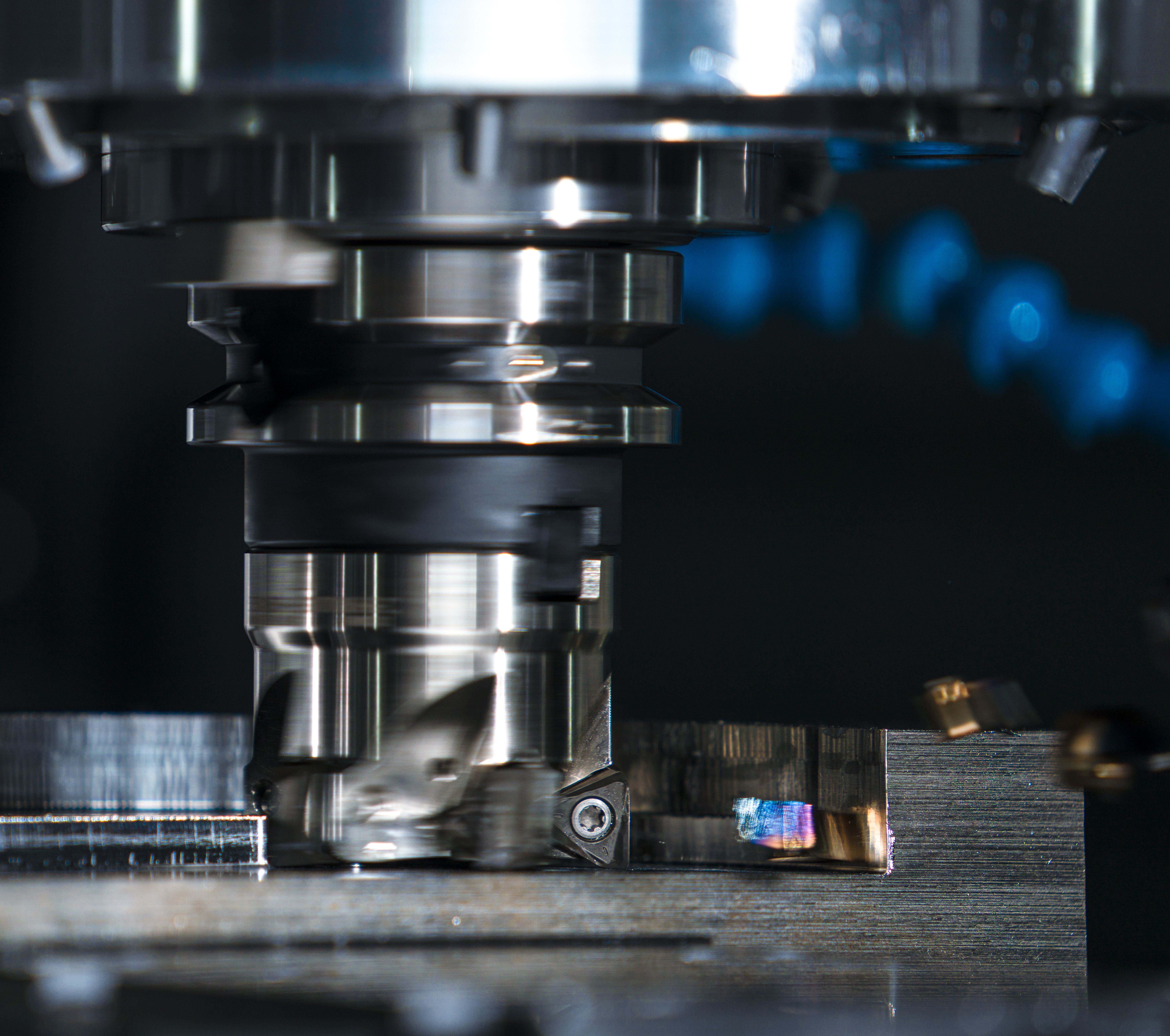
From "Post-Machining" to "In-Process": How Early Can Quality Be Judged?
Traditional quality control relies on post-process inspection — by the time deviations are found, losses have already occurred. This article explains how virtual metrology, powered by a smart sensing toolholder module installed without modifying the machine, captures real-time cutting-force signals to flag tool wear and process drift early — shifting quality judgment from "post-machining" to "in-process," ideal for long continuous runs, large batches, or high-value workpieces.
Scroll


Why Deviations Are Only Discovered at Final Inspection
Tool wear, tool deflection, and workpiece deformation caused by clamping or thermal effects — all of these show up directly in signal changes such as cutting force. By the time dimensional drift is discovered at final inspection, the deviation has already existed for a while; it simply hadn't been seen yet. That invisible interval in between is exactly where the risk of scrapping an entire batch accumulates.
What virtual metrology does is catch the early signs from on-machine signals before the deviation builds up into scrap — giving the shop floor a chance to intervene before the problem grows.
Making the Machine "Speak," Without Modifying It
The most common obstacle to real-time monitoring is that installing a sensing system usually means modifying the machine, running cables, and taking it offline for retrofitting — high cost and long downtime that small and mid-sized machining shops often can't afford.
This is exactly the starting point behind the design of the smart sensing toolholder module. It mounts directly onto the toolholder — no changes to the machine structure required — and captures cutting-force and other signals in real time during machining. Changes in these signals correlate with the degree of tool wear, the amount of tool deflection, and whether the cutting process is stable. By continuously monitoring signal trends, the system can estimate whether the current machining state still falls within acceptable limits.
When the signal indicates the state is starting to drift, the system flags the anomaly, allowing operators to correct the cutting conditions before the next cut or the next part — whether that means adjusting feed rate or spindle speed, or changing the tool earlier — rather than running the entire batch to the original parameters and only discovering the problem at final inspection.
From "Verifying Results" to "Watching the Process"
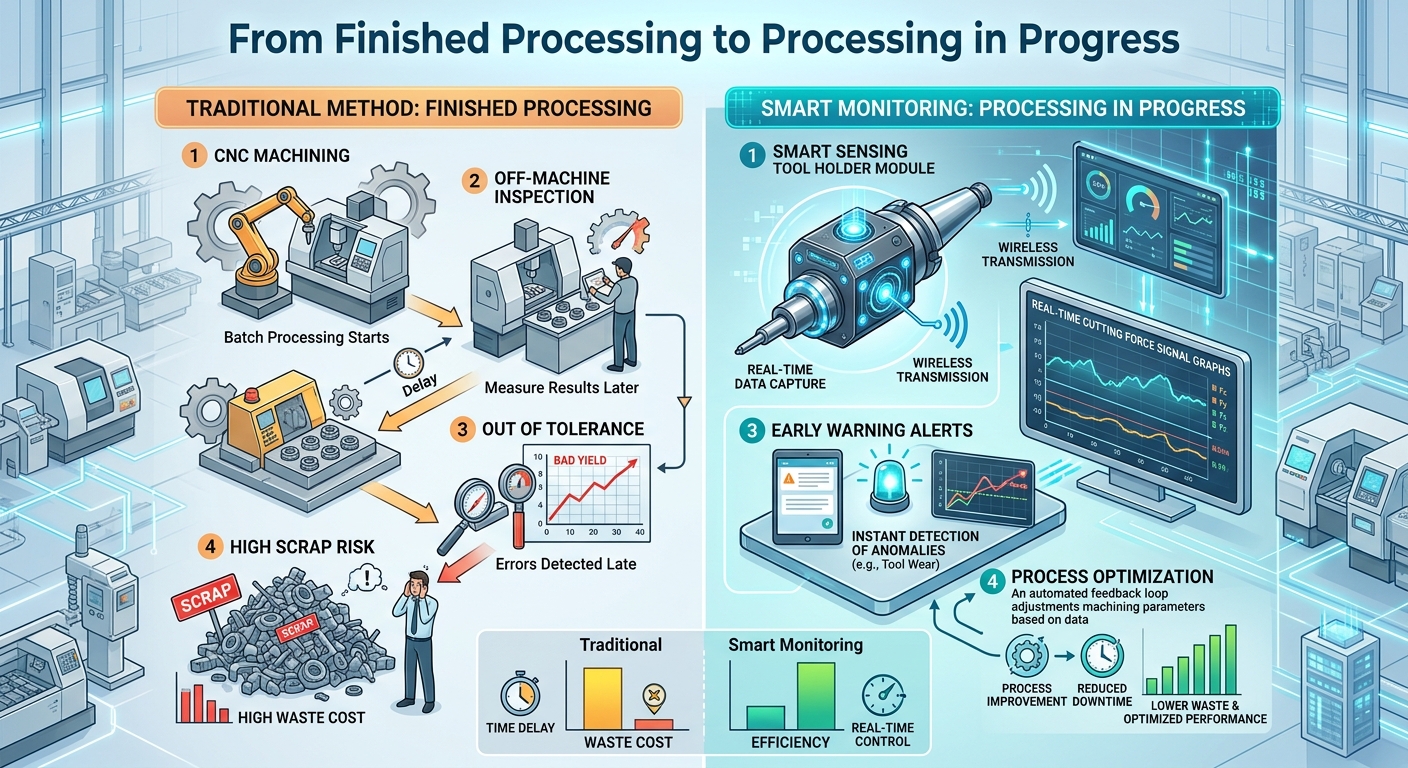
Final inspection tells you "whether this batch has a problem." Virtual metrology tells you "whether the state has drifted, right now, during machining." The two play different roles — virtual metrology isn't meant to replace final inspection, but to add a layer of real-time oversight before final inspection, reducing the cases where an entire batch is completed before an out-of-tolerance condition is found.
This is especially valuable for long, continuous machining runs, large batch sizes, or high-value workpieces — catching an anomaly early is often far more cost-effective than remediation after the fact.
If your quality confirmation currently depends on post-process final inspection, and you'd like to track process state as machining happens, feel free to talk with Machsync about your current machining workflow — we can help assess whether the smart sensing toolholder module is a good fit.
Sources: Public domain references
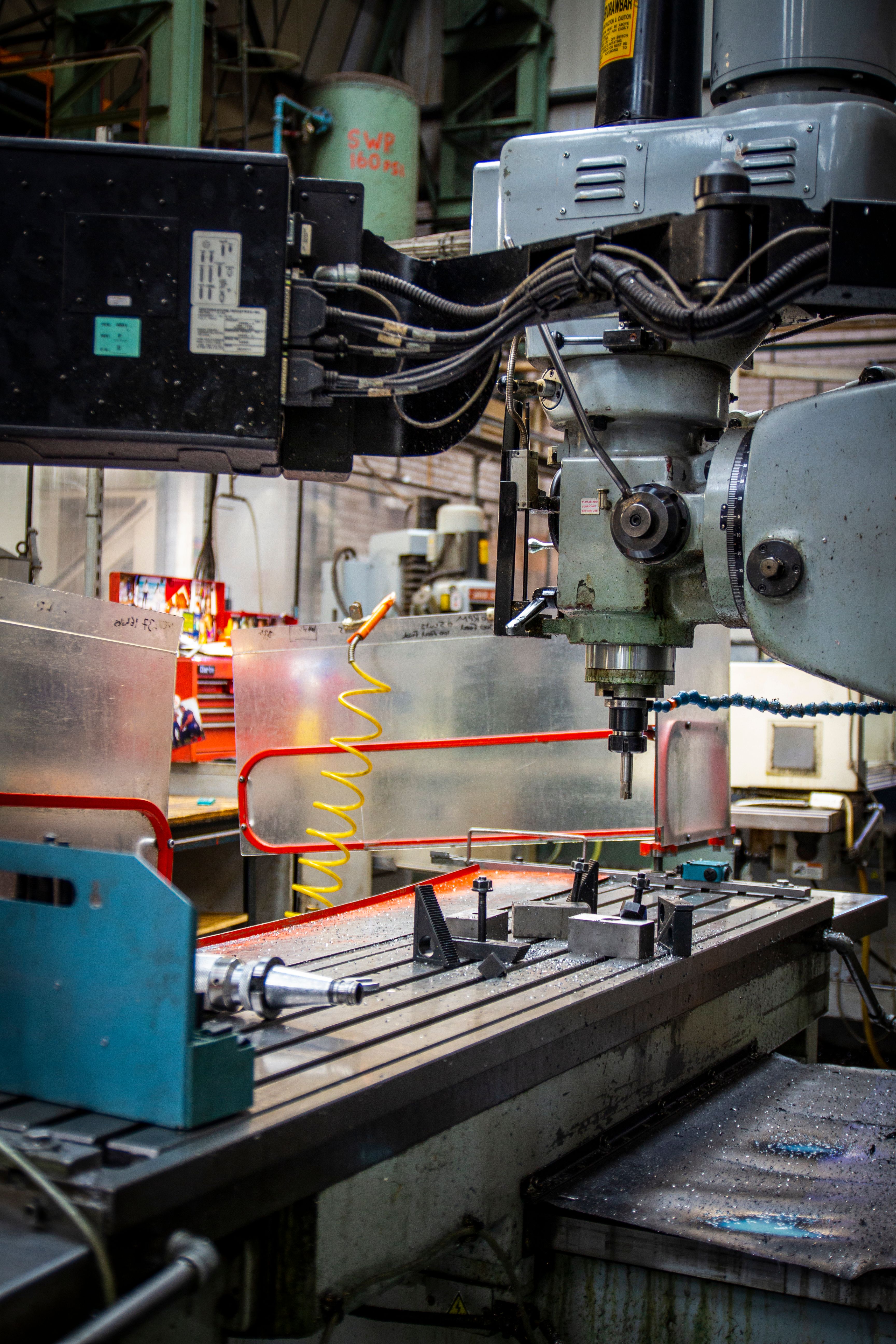
Photo by Daniel Smyth / Machsync
This article is original content created by Machsync. It may not be used for commercial purposes or distributed, shared, or sold in any form. Unauthorized reproduction, excerpting, copying, or use in any visual format is strictly prohibited.
For reprint or licensing inquiries, please contact Machsync.
﹌﹌﹌﹌﹌﹌﹌﹌﹌﹌﹌﹌﹌﹌﹌
📬 Get in Touch with Machsync
📍 2F., No. 38, Keya Rd., Daya Dist. Taichung City, Taiwan
📞 +886-4-2473-6883
✉️ admin@machsync.ai

Related Information
More information